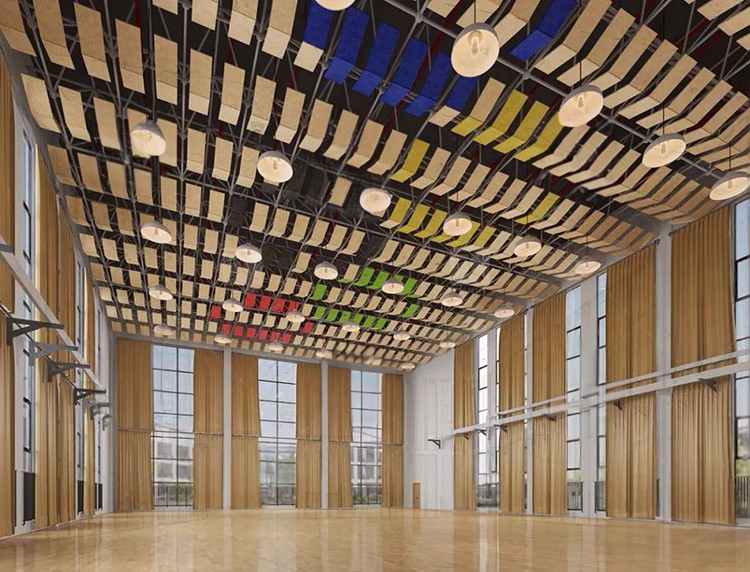
The Hefei Heping Elementary School Gymnasium, a multifunctional sports facility renovated by the school, doubles as a typical outdoor sports ground exposed to the elements. This venue boasts an effective volume of approximately 7810m³, a total area of 2965m², and an effective height of about 8m. With no fixed seating, it falls under the category of a small-sized multipurpose sports hall. This versatile space must meet the demands of teaching, training, in-school competitions, cultural events, and various large-scale celebrations.Acoustic Deficiency Analysis
Given the gymnasium's architectural design and layout, several acoustic issues would inevitably arise without proper acoustic treatment, affecting the venue's usability:
With a volume of 7810m³ and a substantial volume per person, echoing and multiple echoes were likely to occur, resulting in poor sound clarity.
The gymnasium's rectangular shape formed parallel surfaces, prone to flutter echoes. These echoes could lead to significant acoustic interference, affecting both audio equipment performance and the audience's listening experience.
The gymnasium featured limited windows and vents, making it difficult for sound to dissipate. The high proportion of glass surfaces led to pronounced sound reflections, exacerbating the echo problem. This issue was especially problematic during conferences, where excessive echoes hindered clear audience comprehension.
The gymnasium's ceiling consisted of a steel structure, necessitating consideration of acoustic material that could support the load.
Proposed Solutions
Ceiling Treatment: To mitigate flutter echoes, acoustic materials with moisture and fire-resistant properties were installed beneath the steel structure, preventing undesired sound reflections and supporting structural loads.
Wall Acoustics: Given the gym's large volume and extended sound paths, it was crucial to address excessive reverberations. Curtains with high sound absorption capabilities were placed over windows, serving as an effective means of wall acoustic treatment, reducing sound reflections.
Design Outcomes
Aesthetic Appeal: The acoustic enhancements contributed to a visually pleasing and comfortable environment.
Health and Environmental Considerations: The acoustic materials were free from dust contaminants like fiberglass particles, low in formaldehyde emissions, and compliant with indoor air quality standards.
Balanced Sound: The treated space exhibited well-balanced low, mid, and high-frequency sounds.
Fire Safety: The acoustic materials met fire safety requirements.
Clear Audio: Post-enhancement, the venue offered improved sound clarity without tonal coloration.
Optimal Sound Environment: The gymnasium achieved favorable sound and environmental conditions, with a reverb time meeting or exceeding national standards for Grade A venues.
In conclusion, the acoustic improvements in Hefei Heping Elementary School Gymnasium significantly transformed the venue's sound environment. By addressing reverberation and echo issues, the space became both acoustically functional and visually appealing, meeting the diverse needs of the school community. This case study underscores the importance of tailored acoustic solutions in creating optimal auditory experiences within multipurpose spaces.